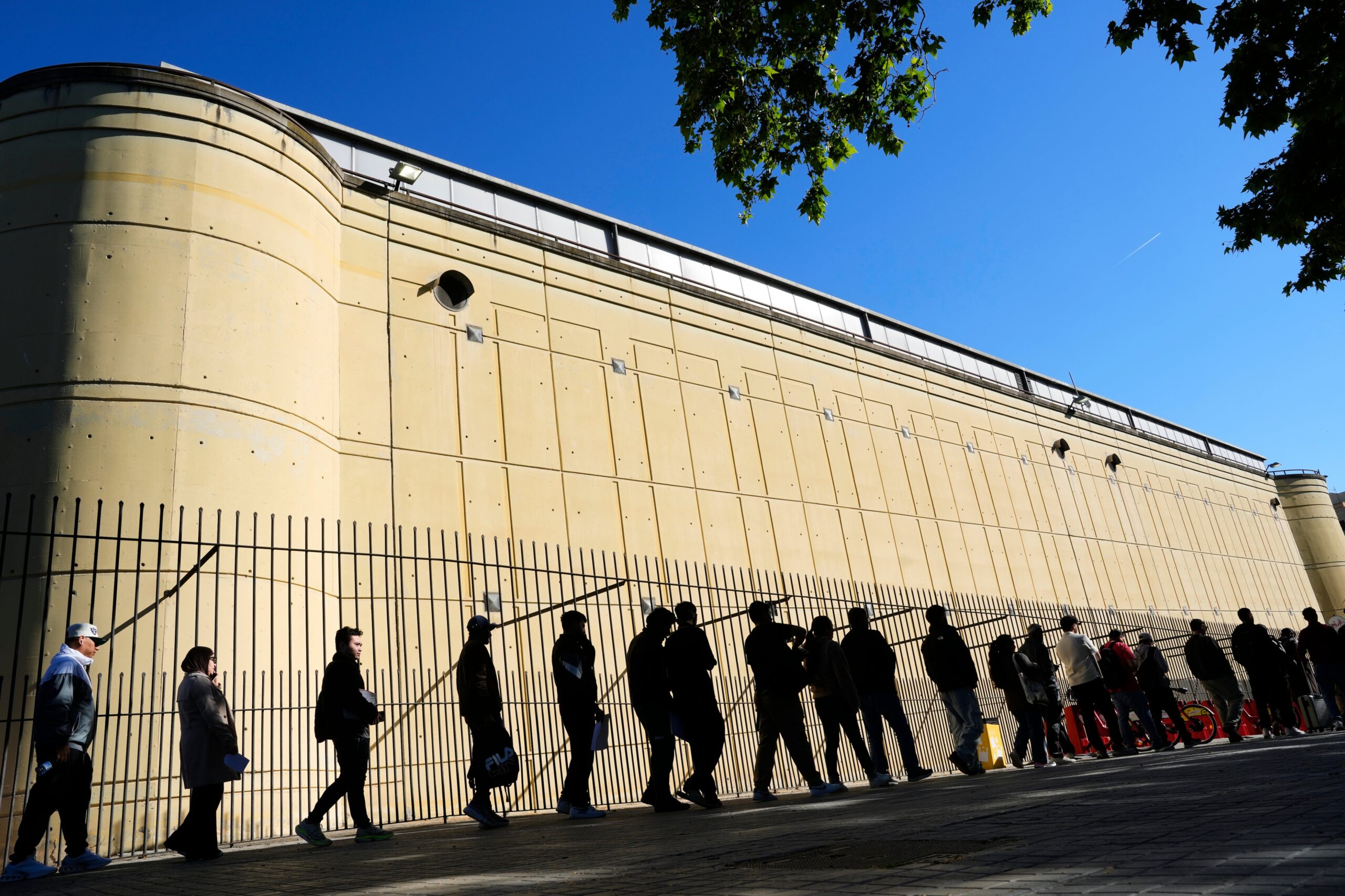
President Donald Trump has recognized on Thursday what experts had been warning for months: that his mass deportation campaign would cause a shortage of workers in sectors that depend on immigrant labor. The Republican has admitted it in a publication in his social network, Truth, in which he has indicated that the sectors of agriculture, hotel and leisure have been especially affected by their immigration policy. This recognition, unusual in someone like Trump, comes after his government intensified the raids in the workplace, which triggered the protests of Los Angeles that have spread rapidly to the rest of the country. “Our great farmers and the people of the hotel and leisure sector have been saying that our very aggressive immigration policy is moving away to very good workers of many years, whose positions are almost impossible to replace,” president. «In many cases, criminals who have been allowed in our country for the open border policy of Biden, very stupid, are requesting those jobs. This is not good. We must protect our farmers, but get the US criminals.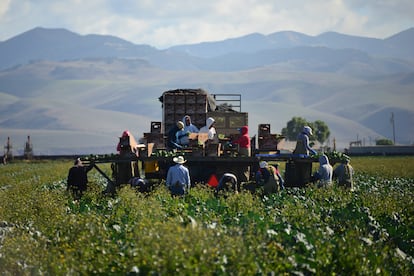 Migrant workers collect vegetables in a County field in Santa Barbara, California.nik Wheeler (Corbis via Getty Images) In recent weeks, the Trump administration has put its spotlight in the work centers throughout the country to redouble their deportation efforts, which have not achieved the president's objectives. This same week, more than 70 people were arrested after a raid of the Customs Immigration and Control Service (ICE, for its acronym in English) in a meat floor of Omaha, Nebraska. Immigration officials later declared that the raid at the facilities of Glenn Valley Foods – which resulted in half of the workforce – was carried out «as part of an ongoing criminal investigation on the large -scale employment of foreigners without authorization to work in the United States.» Also this week, ICE reached several farms in areas of southern California to carry out arrests. A video posted on social networks showed agents chasing some of the workers while fleeing from the fields. The immigration police also raided packers in the area in counties such as Ventura, Tulare and Fresno, all of them powerful agricultural regions of the State. Links like these have unleashed mass protests in Los Angeles. On Friday, ICE agents carried out operations in three workplaces: in an Home Depot, a construction material store; in a winery and in a clothing store. Some 44 people were arrested in the raids of that day, but the government has continued to make immigrants arrests in full citizen mobilization against Trump's immigration policy. The protests in California will soon turn a week, after they extended to almost all the large cities in the country.
 Deported migrants from the United States walk to Mexico on the International Border Bridge Paso del Norte in 2024. Jose Luis Gonzalez (Reuters) in the United States, undocumented immigrants represent between 4 and 6% of all workers. According to estimates from the New York Migratory Studies Center, up to 8.3 million people without papers work in the country, that is, 5.2% of the active population. They are concentrated in a few industries: in gardening, where they are 19%of all workers, in agriculture (17%) and in construction (13%), according to data from Goldman Sachs of 2023. They also have a great presence in the hospitality and in the work related to food manufacture. Jobs that, due to their conditions, without immigrants are empty, since the Americans do not want to occupy them. They do not only contribute to the US economy with their work, but also pay taxes: in 2023, migrants without papers paid 89.9 billion in federal, state and local taxes. The figure represents 2.6% of federal income for that year, according to the American Immigration Council.