According to the analysis, Bitcoin’s decline responds to macro and technological factors, not quantum risk. The similar downward behavior between Bitcoin and the quantum sector contradicts that theory. Grayscale Research, the analysis division of the asset management and investment fund company, maintains that the recent price drop of bitcoin (BTC) is not primarily related to fears about quantum computing. In the text, Grayscale assures that the price of bitcoin in recent weeks is linked to a broader adjustment in assets linked to emerging technologies. Although it recognizes that advanced quantum computers could, in the future, put the security of traditional cryptography at riskthe firm supports accelerating the preparation of the main blockchains against this scenario. In a recent report, the division analyzed the behavior of public companies focused on quantum computing and found that its shares have moved virtually in parallel with bitcoin over the past few months. Companies like IonQ, Rigetti and D-Wavese have plunged more than 25% so far this year, in line with bitcoin’s decline since October. This pattern, as explained, contradicts the idea that there is an immediate quantum threat affecting the market. In fact, if advances in this field were negatively impacting bitcoin, what would be expected would be a rebound in the valuations of these companies, but the opposite has happened. For Grayscale, this behavior reflects a general reduction in risk appetite in growth-oriented portfolios, largely driven by uncertainty regarding the disruption of artificial intelligence and a more restrictive macroeconomic environment.
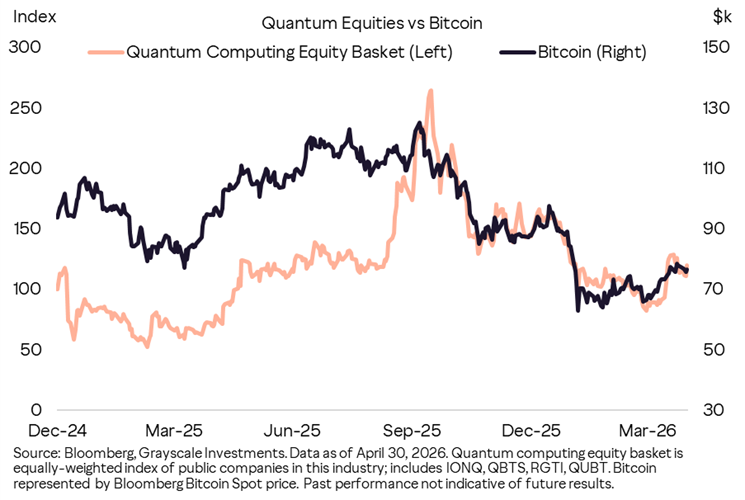 Comparison between the price of bitcoin and the performance of a basket of quantum computing stocks shows synchronized behavior in recent months, with parallel falls after the peak recorded towards the end of 2025. Source: Grayscale The company also points out that, although bitcoin has recently shown a closer correlation with investor interest in cutting-edge technologies such as quantum computing, this does not alter its role as a store of value within diversified portfolios. In his vision, this relationship could be maintained when prices recover.
Grayscale adds that quantum risk does not appear to be the dominant factor behind the pressure on BTC and that valuations could rebound even before a full update adapted to the post-quantum era is implemented. Furthermore, he considers that investors interested in exposure to bitcoin do not need to wait for this technological transition to occur. While Grayscale supports advancing faster in post-quantum readiness in the ecosystem, it warns that the biggest challenges are not technical, but rather governance. In conclusion, the firm emphasizes An eventual recovery of the price of bitcoin will depend exclusively more on the general context of the market and the return of appetite for growth assets. Grayscale Research’s vision counteracts what is stated by some characters in the ecosystem. For example, the investment and financial analysis company, Capriole Investments, who warned last April that the bitcoin market is declining in price as the so-called Q-Day approaches, as BitcoinDynamic explained. On the other hand, analyst and trader, Willy Woo, projected that the price of BTC could enter a period of “broad laterization” of around a decade, due to the uncertainty generated by the advance of quantum computing.