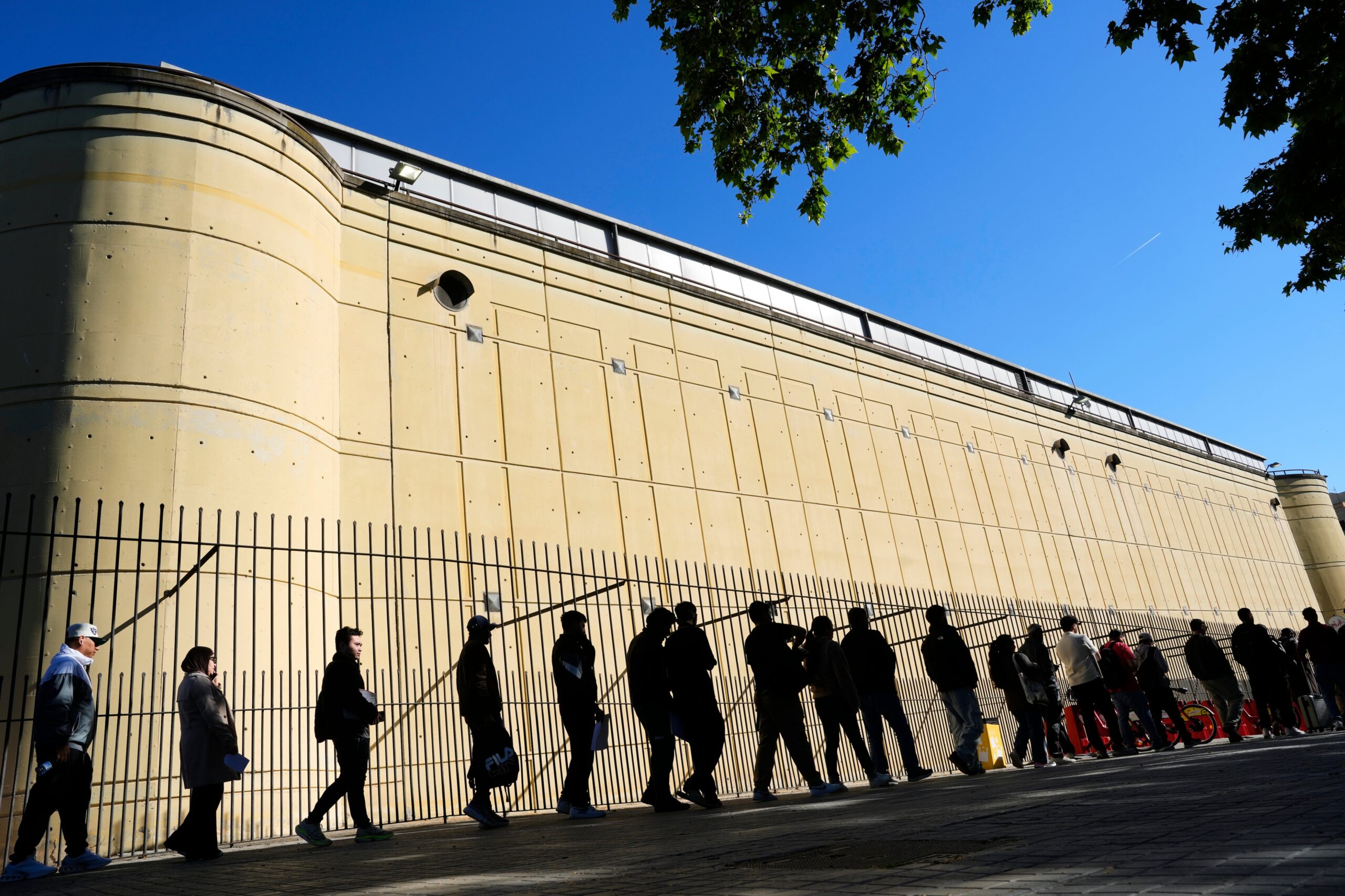
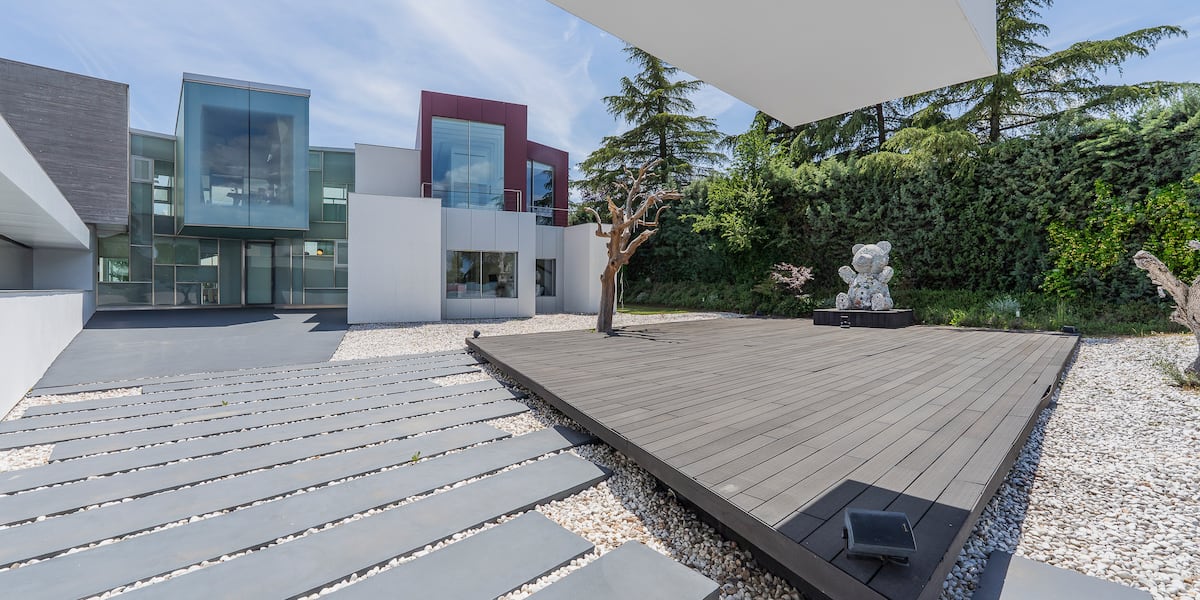
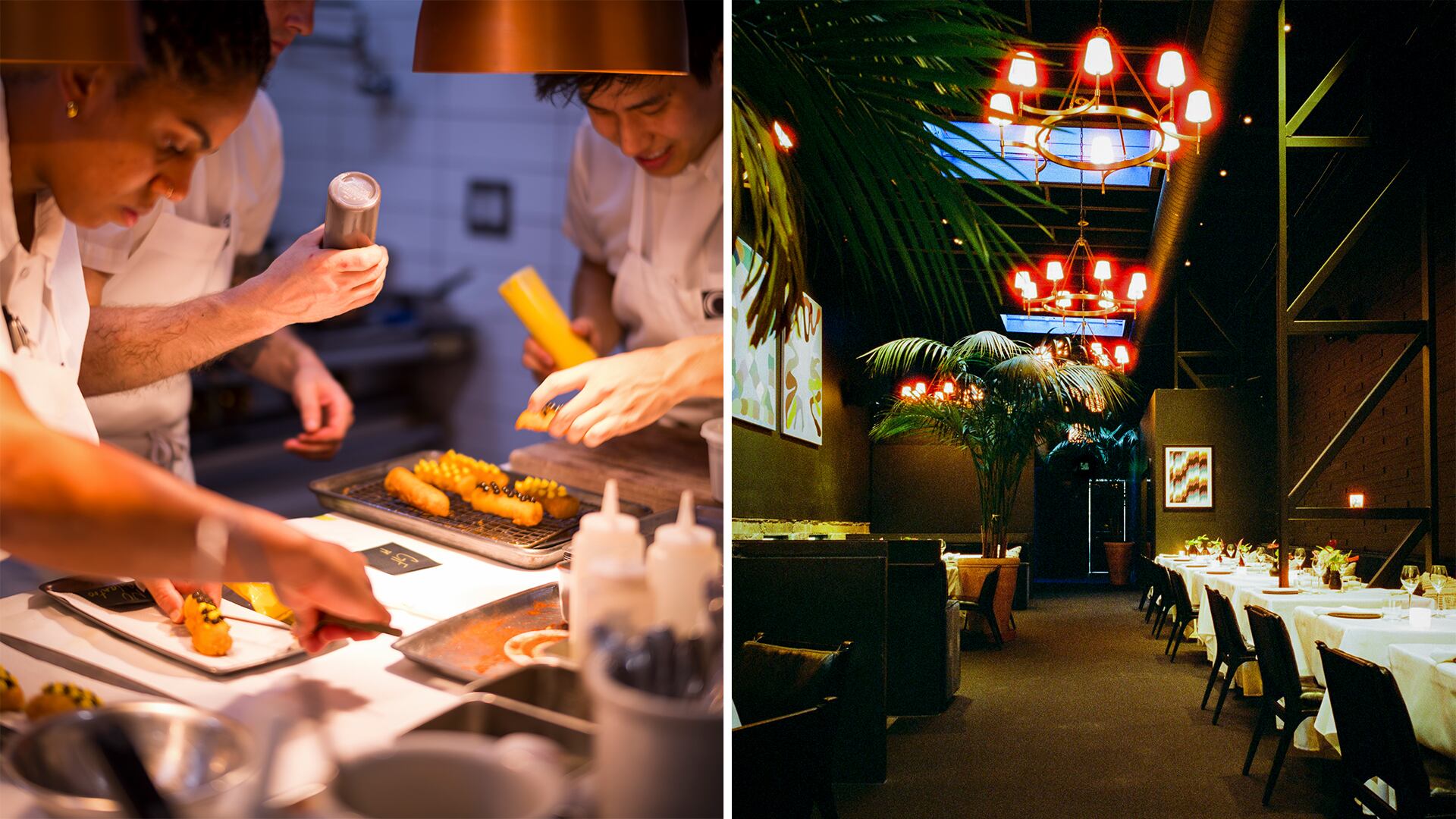
Luxury moves. It goes down and up, it expands into distant countries and disappears from its former domains. It also transforms your appearance. Fashion or watch brands that previously presented Christmas, ski or swim campaigns, always according to the seasons of the northern hemisphere, now launch capsule editions for Singles Day or the Lunar New Year, fundamental dates in Asia, or Eid al Fitr , the holiday that marks the end of Ramadan in Islamic countries. The clocks incorporate Cyrillic and Asian characters, dragons and arabesques. The cruise collection shows, with higher prices than conventional collections, are held in Scotland, Hong Kong or Brazil. The models stroll through monumental enclaves while at the Lars Pass, which connects Georgia with Russia, caravans of luxury cars wait to cross the border to meet their final recipients. Jewelry and watches whose price exceeds a million euros sleep in bunkers under the desert. Haute couture is dressed in closed salons thousands of kilometers from the workshops where they were made. European firms compete for the best locations on Madison Avenue in New York or Montaigne Avenue in Paris, but their real efforts come from Bombay, where there are many customers and few spaces, or Beijing, where the opening of lavish stores continues to be delayed. waiting for better times. The latter, that of empty stores in China, is possibly the most powerful symbol of the current transformations in the sector. Although the global luxury market has had 4% year-on-year growth in 2024, especially in Asia-Pacific and the US, it is a modest figure compared to the euphoria of the previous decade. There is talk of a crisis and it is believed that 2024 will be the sixth worst year for the luxury sector in two decades. The latest results of the giants in the sector leave no doubt: Hermès and Prada resist, but the sales of Kering, owner of Gucci and Balenciaga, fell 16% in the third quarter of this year. LVMH, to which Louis Vuitton and Christian Dior belong, has fallen 3% in the same period. The pace of sales of bags, shoes and watches slows down. And the epicenter of the earthquake is in China, which was a fundamental market in the last decade, when, according to a report by Bain & Co., the luxury market in the Asian giant quadrupled its volume between 2011 and 2021. But China has slowed down, due to the real estate crisis that is devastating the country's economy and also to a cultural factor. Xi Jinping's campaigns to combat corruption have given ostentation a bad name. Serge Weinberg, founder of Weinberg Capital Partners and member of Kering's board of directors, told BFM Business in September that discretion is the new norm. “Large watches, bags, visible elements are put aside to preserve social unity,” he explained. Another symbol of the change of times could be a pair of 150-euro yoga pants. It is sold by the Canadian sportswear firm Lululemon, which this year has made $1 billion in sales in China. Well-being and sport win points over the branded bag. The bulk of the declines in sales of the giants in the sector point to this paradigm shift. And the forecasts prove him right: the consulting firm Digital Luxury Group predicts a 15% decline in the Asian giant's luxury market. For now, dreaming of the appearance of a new market equivalent to the Chinese one is little more than a chimera. “China and the United States will continue to stand out as the two largest luxury markets in the world, which together will contribute 136 billion dollars more to total sales by 2029, and emerging markets such as Turkey, Malaysia, the Philippines and Mexico will be of particular importance and “They will contribute to value growth between now and 2029,” explains Fflur Roberts, head of luxury products at Euromonitor. Part of that power has shifted to Japan, the only place where the sector is experiencing something resembling a golden age and its market is expected to grow between 8% and 12% in 2025. In the Japanese country, the European giants They continue to grow thanks to the fall of the yen and the rise of tourism, which comes mainly from South Korea, China, Taiwan and the United States. They are the ones who are buying the most exclusive products, with some surprises: while Swiss watchmaking declines, the Seiko group, dedicated to the same sector, has seen its sales rise by 18% in the second quarter driven by the rebirth of Grand Seiko, its most exclusive brand. For the first time, American tourists flocking to Tokyo are spending money on watches made there. To find luxury, in any case, you have to look where the rich are. The key word is UHNWI, an acronym that designates ultra-high net worth people. There are more of them in the United States, but they are multiplying faster in India, where their number is expected to grow by 50% between 2023 and 2028. Perhaps that is why there are so many eyes on Bangalore, the Indian Silicon Valley, whose industry technology has given rise to spectacular displays of status. There, as a local observer told Business of Fashion last February, “Louis Vuitton bags are more common than shopping bags.” For this reason and others, India is a source of hope for the sector. Indians' spending on luxury did not reach 8 billion euros in 2022, but is expected to reach 30,000 in 2030. The sun, in any case, continues to shine for the super-rich in the United States thanks to the reduction in inflation. Optimism is more cautious in Europe, where tourism is growing (but not Chinese) and the shadow of the conflicts in the Middle East and Ukraine looms. Russia, which until the war was a fundamental client, remains in a kind of limbo. There, sanctions due to the war in Ukraine affected the import of luxury goods, but for some time, as a report in EL PAÍS reported, ways have been found to circumvent these limitations through neighboring countries such as Georgia or Kazakhstan. Middle East conflicts are also changing the rules. If in the autumn of last year the Red Sea crisis forced the search for alternative maritime trade routes, the wealthy Lebanese who have taken refuge in the Gulf countries have given an unforeseen boost to department stores. The first market in the area continues to be the United Arab Emirates, but Saudi Arabia is growing at a faster rate. That is where strategic projects from international brands are concentrated, such as the new Valentino stores in Jeddah or the polo tournament in the desert organized by the luxury watchmaker Richard Mille. And the inauguration of a large hotel complex on the Red Sea is being prepared, whose promoters have declared that women will bathe in bikinis on the same beaches as men.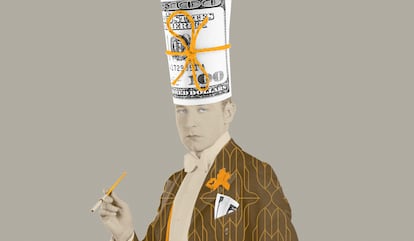 The epicenter of the luxury business earthquake is in China, which was a fundamental market in the last decade.Mr. GarcíaIf tourism allows us to understand the changing tectonics of luxury, it is essential in Latin America, where legislation and high tariffs continue to hinder the entry of large international groups. This is explained by Vernon Montero, who works as a fashion and lifestyle buyer in Costa Rica, a country that illustrates the particularities in this region. The most buoyant sectors there are watchmaking, hospitality and vehicles. Not so with fashion, because taxes raise the final price of items so much that most buyers travel to Mexico City, Miami or São Paulo to purchase them. “It is economical and they are just a few hours away,” explains Montero. What Costa Rica does stand out for is its hospitality offering, mainly linked to luxury resorts in natural enclaves, which “attract tourists with a lot of purchasing power who invest mainly in real estate and, derived from it, in design and construction.” It is a reflection of another global trend: fewer cars and watches, but more travel and experiences. “Consumer demand continues to shift towards experiences, services and lifestyle,” notes Roberts. Experiences are as important as the product. Carolina Herrera's Resort 2025 fashion show was held in Mexico City, the region's true hub of luxury. Millionaires in Mexico increased by 2% between 2020 and 2021 according to the consulting firm Knight Frank, and the Aztec country stands out especially in the field of cosmetics and selective perfumery. And then there are the increasingly higher prices. Specifically, 54% higher than before the pandemic, according to HSBC. During the boom years the market absorbed the increase, but the slowdown in sales has brought another neologism, greedflation, a mixture of “greed” and “inflation” that translates into viral videos that examine the manufacturing defects of products. Recovery, in any case, could be closer than it seems, but less obvious than many wish. The latest report from McKinsey & Company and Business of Fashion shows a 2025 that will extend the slow pace of 2024. The increase in turnover will once again be measured with one digit instead of two. Luxury cannot be in danger in a world with every increasingly super-rich, but its appearance, its norms and its distribution do change. It is not something new, because it has always been global. Even in its moments of greatest founding purity, Paris haute couture survived thanks to its juicy deals with American department stores, and European jewelry and watches were sold to customers in Pakistan or Moscow. European designer fashion lived off sales to multi-brand stores in Japan, and perfume prices have risen exponentially thanks to the enthusiasm of Arab countries. All these tensions are part of the tectonics of the sector. And they serve to compose a panorama of the planet where its contradictions, contrasts and threats are reflected in something as intangible and powerful as desire. Ultimately, desire is the only stable and permanent thing in the unpredictable logic of luxury.