The bolivar lost 87% of its value in one year, making it the weakest currency in the world today. For analysts, official dollarization would displace the P2P cryptoasset markets. The persistent instability of the bolivar has returned the possibility of official dollarization in Venezuela to the center of the debate. The country is closing February 2026 with an annual inflation of 665%according to estimates by economics professor Steve Hanke, from Johns Hopkins University (one of the most prestigious academic institutions in the United States). These are independent measurements that arise due to the lack of official data from the Central Bank of Venezuela (BCV). This crisis, described as «prolonged» by the International Monetary Fund (IMF), has pulverized the value of the national currency by more than 87% annually. Given this situation, the authorities’ room for maneuver has been almost non-existentwhile experts evaluate underlying solutions. In this scenario, some economists who spoke with BitcoinDynamic see official dollarization as a possible way out. A logical step to stabilize prices and attract investment. Although other analysts think that the measure implies a renunciation of monetary sovereignty and greater vulnerability to external shocks. The core of the controversy lies in whether dollarization can restore institutional confidence and foster growth. Regarding this, the Venezuelan economist Daniel Arráez stated the following:
As long as there is no re-institutionalization of the country and true independence of powers, any economic measure taken is going to be a wash of cold water. An official dollarization in Venezuela still leaves us with a country with sanctions. There will be new rules of the game and even so the dollars will continue to go through a central bank that will allocate the amount of dollars that will be on the street, or how much will be the amount of dollars that will circulate in the economy. Daniel Arraez.
 Arráez, Venezuelan economist and bitcoiner, highlights the limits of measures such as dollarization without deep institutional reforms. Source: YouTube/Bitcoinismo. Arráez maintains that The officialization of the dollar in Venezuela would not resolve the underlying distortionssince a dynamic of high prices would persist in the country, even by regional standards, and systemic distrust. He adds that, in the absence of economic freedoms and legal security, the flow of foreign capital will continue to be elusive. This gives digital assets such as bitcoin (BTC) a leading role as censorship resistance tools, while Tether’s USDT stablecoin is a facilitator of cross-border operations. A contrary position has the specialist in the digital assets sector, Franklin Roldán, for whom an official dollarization would only recognize reality of what has been happening for quite some time. This refers to de facto dollarization present for several years in the country.
I think that officially establishing the currency with which prices are calculated in all sectors of the economy could also help establish salaries and, consequently, provide greater economic stability to Venezuelans. Something we urgently need.
Is it possible or feasible? I really don’t know. But I do consider that it is a necessary debate, which must take place seriously, to look for alternatives that allow workers to recover their purchasing power, even if it is progressively. Franklin Roland.
Dollarizing brings risks for sovereignty
The discussion on the topic, which is also taking place at an academic level, seeks to balance the benefits and dangers of the exchange rate «straitjacket.» In this regard, Ronald Balza, dean of the Andrés Bello Catholic University, recalls that the Venezuelan State has historically been prone to opaque debt. Therefore he thinks that Dollarizing does not guarantee fiscal discipline by itself.
Hyperinflation was stopped without dollarization. When talking about de facto dollarization, I always emphasize the fact that dollars began to be spent in the economy. It was not that the bolivar was eliminated. In other words, we moved to an explicit multicurrency system […] I do not believe that dollarization is what produces this stability, but rather the possibility of spending more, and that this spending has come, for example, from dissavings or from investments that come from other parts that do not require other currencies. Ronald Balza.
Warns that replacing the national currency could generate greater external dependence and loss of economic instruments. He emphasizes that «stability also depends on how taxes and state revenues are administered.»
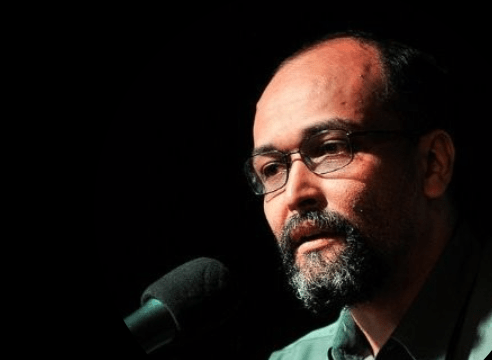 Ronald Balza, dean of the Faculty of Economic and Social Sciences at the Andrés Bello Catholic University (UCAB), debates the possible dollarization of Venezuela. Source: Linkedin. For her part, Tamara Herrera, president and chief economist of the consulting firm Síntesis Financiera, warns that dollarizing the country is not a magical solution. The expert assures that the country could be trapped in a «limited stabilization», with restricted growth and no capacity to respond to drops in income or external fluctuations. That would be the result if transparent fiscal rules and institutional accountability are not applied; in addition to previous reforms, such as a stabilization fund to absorb external shocks (especially in a vulnerable oil economy). For Herrera, dollarization imposes rigor, but its success It depends on Venezuela first building the institutional foundations and governance. What has been missing for decades.
The dangerous thing about defending dollarization is that it has many virtues, because it forces your behavior and what you have, in reality, what you have been dragging for decades, is distrust in that policy management that repeatedly leads you to the fact that there is no one who wants their own currency. […]
Tamara Herrera.
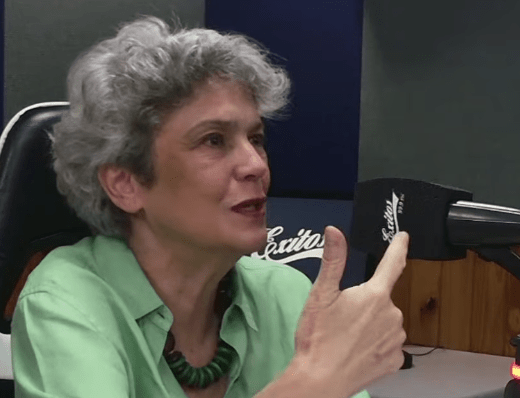 Tamara Herrera, economist and director of Síntesis Financiera, emphasizes that dollarization requires stabilization and accountability funds to be sustainable in Venezuela. Source: YouTube/MundoURenVivo. Consider, therefore, that the important thing is to «end the underlying disease», which is the mistrust that creates the absence of interest in the bolivar. «Then you would be building a strong exit path, but you need that stabilization fund, you need clear rules, you need transparency,» he said.
The regional experience in dollarization
The evaluation of the possible dollarization of Venezuela involves reviewing the steps that other Latin American countries have followed, where the official currency is the dollar. The analyzes show mixed results. For example, reports on Ecuador’s dollarization, adopted in 2000, show that inflation was reduced to an average of 4% annually. Poverty and unemployment also decreased, credit expanded and exports diversified. Although inequality has increased and limited responses to crises such as that of 2008. In El Salvador, dollarized since 2001, prices have stabilized thanks to low inflation. Exchange rate risks in trade and remittances have been eliminated, and interest rates have been lowered, saving the private and public sector up to half a percentage point of annual GDP. But the process has restricted flexibility in the face of external shocks and generated a loss of seigniorage, as highlighted by specialists from the World Bank and the IMF. Taking these experiences into account, the director of Ecoanalítica, Alejandro Grisanti, warns that following in the footsteps of Ecuador or El Salvador would leave Venezuela defenseless against external shocks, such as the volatility of the price of oil. Therefore, he advocates by an independent central banksimilar to those of Peru or Colombia, to defend the national currency instead of abandoning it.
I prefer to stay with the bolivar. I prefer to return to a bolivar that has purchasing power, to an independent central bank that defends the purchasing power of the bolivar. […] Because economic cycles can be very different in a country like Venezuela than in a country like the United States. And you need a currency to be able to face these economic cycles and be able to maintain the purchasing power of your population. Alejandro Grisanti.
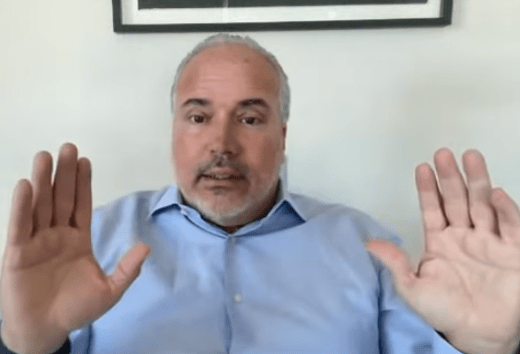 Alejandro Grisanti, director of Ecoanalítico, questions dollarization without monetary sovereignty. Source: YouTube/David Placer. Grisanti recognizes the immediate benefits of dollarization, such as the rapid containment of inflation and the elimination of daily exchange rate uncertainty. But he warns that It is an irreversible measure that eliminates key economic policy tools (adjustment of interest rates or exchange rates for competitiveness). Something that could aggravate rigidity in the face of falls in oil revenues or variations in the policy of the US Federal Reserve. In the context of 2026, with a political transition underway and greater inflow of foreign currency, Grisanti prioritizes eliminate exchange control and unify the exchange rateas previous and most feasible steps to reduce distortions, corruption and exchange gap. This, before considering full dollarization which, according to him, does not solve underlying structural problems such as the lack of institutional trust or the need for economic diversification.
Bitcoin and USDT: the digital refuge
As BitcoinDynamic has reported, given the collapse of the bolivar, the use of bitcoin and stablecoins such as USDT has grown substantially. These assets facilitate remittances (around 9% of the total in 2023) and international payments in a context of sanctions. With its use, Venezuela is positioned in the top 20 countries in adoption of digital assets globally. However, technology law lawyer Raymond Orta warns that this “exit” lacks a safety net. «If the issuer of a stablecoin goes bankrupt, Venezuelan users could wake up with their savings blocked,» added to risks of volatility, connectivity problems and possible illicit use, although the traceability of digital asset networks makes criminal activities difficult. It warns that official dollarization could reduce or displace P2P currency markets (dollars and USDT), which support thousands of people through arbitrage and informal transactions. Therefore, Orta suggests that Venezuela should look towards models like the Bermuda one, where digital assets operate under strict supervision regulatory.
With stablecoins like Circle’s USDC, which is already supervised in the United States. And given that it is an asset that simulates the dollar and has adjustable support, it is perfectly viable to do something like what Bermuda did in Venezuela. In that way I see it as totally recommendable, especially at this time when we can have the doors open to achieve it. Raymond Orta.
In general, the consensus among specialists is that no monetary change will be sustainable without deep institutional reforms. Nor without transparency that allows reactivating investment in the oil sector. It is then expected that in this panorama of legal mistrust, digital assets will be strengthened as an operational pillar. Therefore, bitcoin and USDT will continue to play a leading role as censorship-resistant systems. «And as long as the barriers to the traditional free market persist, the cryptoeconomy seems destined to consolidate itself as the refuge for Venezuelans. All this, in a society that will hardly return to the exclusive use of cash or conventional banking systems, as Arráez pointed out.