The year 2025 closes in Venezuela with a revelation that few anticipated just three years ago, and that involves cryptocurrencies, mainly due to the tether stablecoin (USDT). This digital asset, anchored to the US dollar, and others such as bitcoin (BTC) are consolidated as a fundamental pillar of the Venezuelan economy. Far from the fever of quick and easy money, the country’s inhabitants turn to a new functional financial infrastructure, where adoption is born from necessity. The marked shortage of foreign currency during the second half of 2025 acted as a catalyst. Furthermore, given the limitations of the traditional system, the private sector searched and found cryptocurrencies, especially stablecoins such as tether (USDT), usd coin (USDC) and dai (DAI), an efficient mechanism for cross-border payments and the acquisition of goods and services. Bitcoin, for its part, maintained its role as the structural basis of the ecosystem, as noted by financial advisor and cryptocurrency educator Aníbal Garrido. What happens in Venezuela in 2025 Garrido summarizes it like this: there was widespread use of cryptoassets driven by the shortage of foreign currency, which led the private sector to adopt efficient mechanisms for international payments to suppliers. Local exchange platforms, operating under an adapted legal framework, have played a key role in offering regulated options and prioritizing regulatory compliance. In Garrido’s opinion, this has reinforced the private sector as the main driver of sustained and practical adoption.
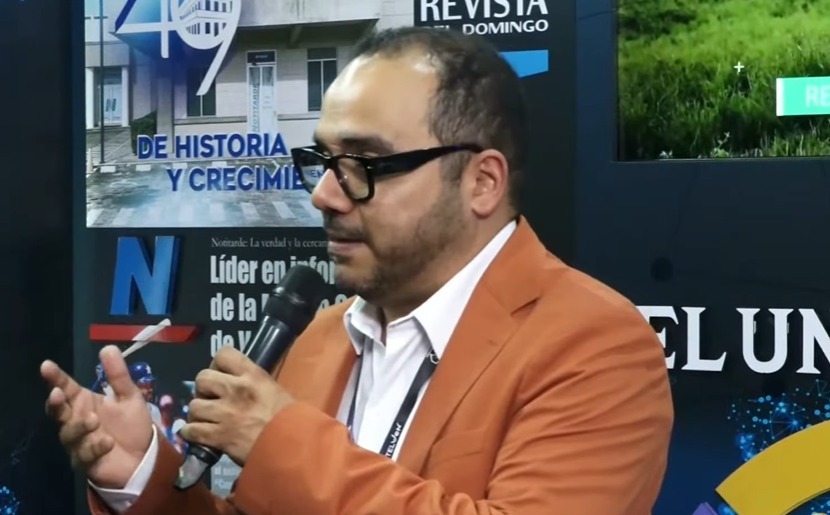 For Aníbal Garrido, «the shortage of currency catalyzed a practical and regulated growth of the cryptocurrency ecosystem in Venezuela.» Source: Screenshot – Youtube (@GlobovisiónVídeosenVivo).
From adoption to consolidation
Orlando Sevilla, digital finance educator, highlights a fundamental change: «2025 represented for Venezuela a maturation process for the cryptocurrency ecosystem.» For him, the Venezuelan market began to differentiate more clearly the use of these assets. Adoption became more selective. He believes that Venezuelans no longer approach cryptocurrencies with the hope of getting rich quickly, but rather as an «alternative financial tool given the limitations of the traditional system,» he explained to BitcoinDynamic. Stablecoins like USDT was consolidated as a value protection mechanism against inflation, medium of exchange and bridge for remittances and digital commerce. «Adoption occurs when technology solves specific problems,» stated Sevilla, highlighting that Venezuela did not experience a simple «boom», but rather a «maturity process.» Despite progress, education and regulation remain challenges. Sevilla adds that the «sustained growth of digital financial education» has been characterized by the incorporation of private universities and academies, which offer more structured training. However, “a significant gap persists between people using cryptocurrencies without fully understanding the risks, custody, or technological framework that supports them.”
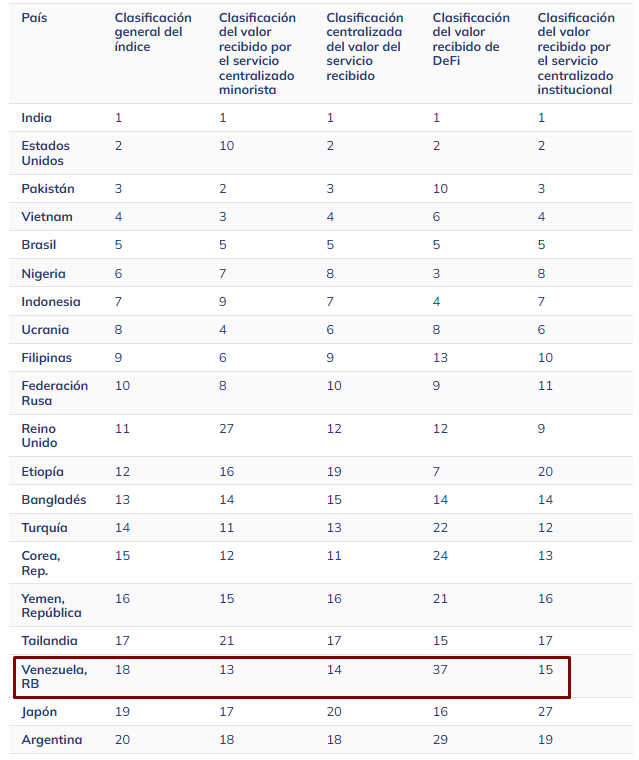 Venezuela ranks 18th globally and 9th per capita in cryptocurrency adoption, in the Chainalysis 2025 Ranking. Source: Chainalysis. In the regulatory field, the year remained ambiguous. «Although there were no regulatory advances, the market regulated itself, generating an ecosystem where operation is possible,» explained Sevilla. He believes that this absence of clear rules is a limitation for institutional adoption. However, the emergence of regulated platforms such as Crixto (in alliance with Binance) and Kontigo has facilitated processes and strengthened P2P (peer-to-peer) trading, remittances and asset tokenization.
«Venezuela: a laboratory of financial adaptation»
Juan José Martínez emphasizes the Venezuelan’s ability to adapt. “Cryptocurrencies and especially stablecoins like USDT injected oxygen into the economy of many people.” This year has been one of “adoption, of using cryptocurrencies as an escape valve.” For Martínez, starting in 2025, cryptocurrencies «are already part of the Venezuelan economy.»
This year, which is closing, does so with a lot of uncertainty and economic limitations in the face of which USDT acted as a valve that has allowed us to have foreign currency on hand, to save, to transfer value. It is also worth highlighting the Venezuelan’s ability to adapt, which produced a much faster adoption than could have been thought before. But it must also be taken into account that in 2025 the platforms have helped and facilitated adoption. We must recognize the efforts of platforms such as Kontigo, Crixto, Binance that have facilitated the processes in Venezuela. Juan José Martínez, financial educator in Venezuela.
Juan José Martínez highlights the Venezuelan adaptation to face difficult situations. Source: Cortesí Juan José Martínez.

Crypto asset enthusiast Alexis Valera concludes that in 2025 Venezuela will become a “global case study” for the way its citizens adopt cryptocurrencies. For him, the story of what happened in one year with digital assets in the country, in the midst of a complex economic context, is thatpeople found a “practical answer” in technologya “cushion to save and an alternative way to pay.” The lesson from Venezuela is compelling: cryptocurrencies, far from being a fad, have taken root as an essential and practical part of the everyday economy. The future will depend on how quality education, a functional regulatory framework and solutions focused on people, not speculation, are strengthened. Venezuela is thus positioned as a national laboratory for alternative financial adoption, where technology solves concrete problems, beyond promises.
What to expect for 2026?
Looking to the future, The path of cryptocurrency adoption in Venezuela presents several possible scenariosas Alexis Valera pointed out. On the one hand, he envisions greater formalization, where activity could be channeled through new regulated platforms, seeking to offer greater security and clarity for all participants. However, Valera also anticipates that the P2P market would remain strong, driven by trust among users and the undeniable practicality that direct commerce offers. In this scenario, the reign of USDT and other stablecoins seems assured. «They will continue to be the favorites for common transactions, because they are easy to understand (1 USDT = 1 dollar) and also less volatile,» Valera added. Furthermore, the future of the adoption of digital assets in Venezuela would not be exempt from external influences. Valera emphasized that any significant change in the global panorama of cryptocurrencies or in international finance could accelerate or, on the contrary, slow down the trend that is brewing in the country.