In the European panorama of clinical trials for new medicines, Spain stands as a benchmark. Of the 2,500 tests carried out in the area last year, 45% were carried out in national research centers. This strength comes after years of collaborative work between health authorities, research hospitals, patients and pharmaceutical companies. After the United States, Spain is the second country in this matter and participates in one of every three tests that are launched in Europe. To maintain this position, we must be alert, continue investing in R&D and overcome the gap between public research and its translation to clinical phases. Leadership is due, to a large extent, to the solid healthcare structure: little fragmented and with a strong presence throughout the territory, indicated Javier Padilla, Secretary of State for Health, during the event organized this week by EL PAÍS and Farmaindustria. “There is something that is in our idiosyncrasy, that is in the DNA of our country, which is the structure of our national health system,” Padilla said. The cohesion of the system, the secretary added, allows for the high accumulation of data, which is essential to identify patterns and trends in patients' response to treatment, in addition to providing critical evidence on the safety and effectiveness of tests or interventions in study.Spain, according to Padilla, cannot miss the opportunity and has to continue advancing in clinical research. “We have to have the ability to assemble this R&D leadership with leadership that is also transferred to the field of drug production and continue it with the complete chain that would be related to access and sustainability,” he emphasized. Collaboration between key sectors is essential to boost an industry that could be the spearhead of an entire sector. In addition, he indicated that Spain has the capacity to continue advancing in precision medicine such as advanced cell therapies. Regulatory adaptation is key to taking that step.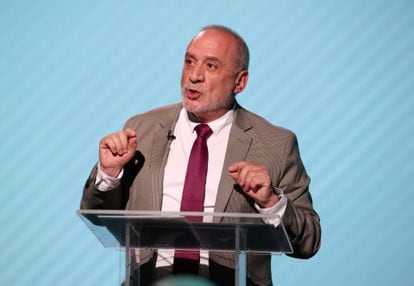 Juan Cruz Cigudosa, Secretary of State for Science, Innovation and Universities. Pablo Monge “Today no one doubts the value of clinical trials,” highlighted Juan Cruz Cigudosa, Secretary of State for Science, Innovation and Universities. During the health crisis, the country emerged as a leader in clinical trials against covid-19 in Europe. This milestone, as Cruz described it, was “probably the largest scientific project in history,” highlighting the value of science and collaborative innovation. However, Cruz identifies two key challenges. The first is the transfer of science produced in Spain towards tangible solutions for society, and the second is to convert clinical research into innovations produced in the country. “We need industry,” he emphasized. In response to these challenges, he said collaborative instruments have been put in place to foster scientific and clinical activity. “Without science there is no future and we are working on it.” “We are world leaders,” added Juan Yermo, general director of Farmaindustria. This position has been thanks to years of work together with the public administration and medicines agencies, both national and European, which have streamlined processes to allow the development of various projects, said the industry representative. Currently, there are between 4,000 and 5,000 in progress and about 170,000 people participating in some of those that are active. The health professionals and patients who have trusted in these projects have been fundamental to achieving this milestone, Yermo highlighted. “And, of course, the pharmaceutical industry itself has been key, as it supports 90% of the financing of the trials.” “We have arrived based on work, effort and collaboration,” stressed María Victoria Mateos, hematologist at the University Hospital. from Salamanca and president of the Spanish Society of Hematology and Hemotherapy. “When I explain it to the participants in clinical trials, I start with a sentence: the process that a medicine takes from the moment it is discovered to the home to the patients' medicine cabinet is a long, complex and expensive process,” he added. For her part, Raquel Yotti, commissioner of Perte (strategic project for economic recovery and transformation) for Vanguardia Health, commented that a greater effort must be made to extend clinical trials beyond the main cities. “They continue to concentrate in big cities, in Madrid and Barcelona,” she said. The promotion of decentralized and networked clinical trials represents a bold step towards democratization and access to therapeutic innovation. Decentralization, Yermo explained, is occurring thanks to remote monitoring and telemedicine. “Using more digital tools to allow patients from different parts of the Spanish territory to participate in the clinical trial,” he commented. Network clinical trials, for their part, are carried out through collaboration and coordination between multiple healthcare centers. , such as hospitals, clinics and research centers. Rather than being limited to a single site, they are conducted simultaneously in multiple locations that are interconnected to share data, resources, and participants. “Network trials are absolutely necessary, although they are not easy to implement, because it means investing in the training of professionals who are in satellite centers,” Mateos argued.
 Javier Padilla, Secretary of State for Health.Pablo MongeFollow all the information on Economy and Business on Facebook and xor in our weekly newsletter