Bitcoin is moving away from USD 70,000, the level at which it had been lateralizing. Analyst Michaël van de Poppe abandons the bullish thesis he maintained until a few days ago. The price of bitcoin (BTC) experiences a strong decline in the market this March 27, 2026. The digital currency faced a fall of 4% in the last 24 hours and 5.6% in the last week, reaching $65,600, a price it had not fallen since March 1. At the time of this publication, as can be seen in the BitcoinDynamic Price Calculator, each bitcoin is trading at $65,700. This bearish movement has caused extreme fear to spread throughout the market, altering the social sentiment of investors, those who have gone from optimism to a phase of deep pessimism between March 19 and 27. Data analysis firm Santiment has identified that the market has entered a phase of «extreme fear.» According to the firm, This scenario is paradoxically necessary for a recoverysince “widespread FUD (fear, uncertainty and doubt) is a necessary ingredient for a relief rally, as markets move in the opposite direction to majority expectations.” Currently, bitcoin has entered deep into the “FUD Zone.” It is worth clarifying that Santiment’s fear and greed index for bitcoin works as a thermometer of social sentiment, processing large volumes of data from social networks such as X, Reddit and Telegram to identify the psychological extremes of the market. Unlike other indicators that rely on technical volatility, this model uses natural language processing to measure the volume and weighted sentiment of conversations, detecting whether the predominant narrative is one of euphoria (greed) or capitulation (fear).
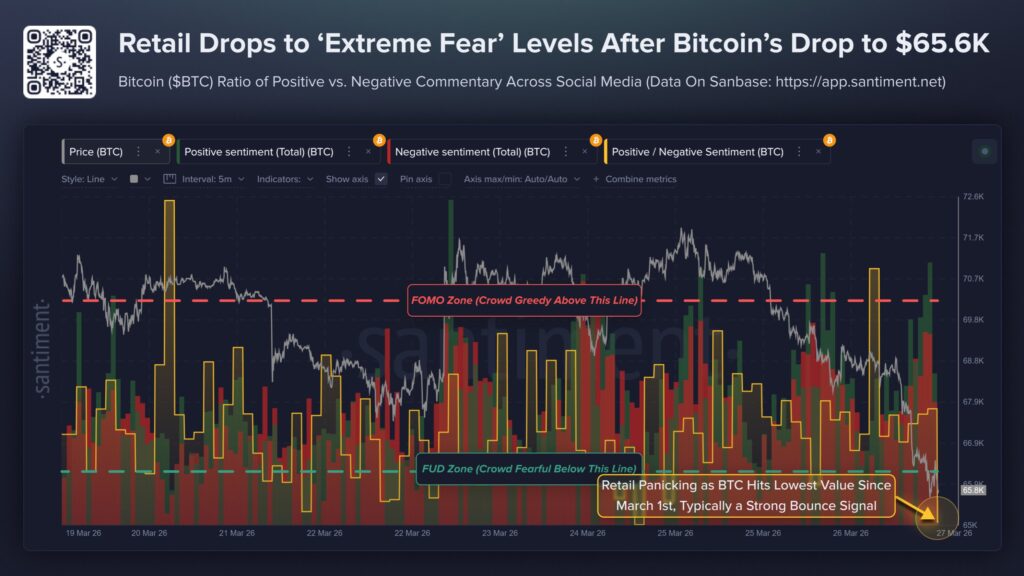 Volume bars indicate retail panic. Source: Santiment – This implies that, while the majority of users expect new crashes due to the conflict, A market bottom could develop that drives an unexpected technical rebound.
Geopolitical conflict as a trigger for the fall of bitcoin
This bearish movement was driven by the escalation of war tensions in the Middle East, which began on February 28. Since the beginning of the conflict, geopolitical instability escalated rapidly due to the closure of the Strait of Hormuz, a vital maritime corridor connecting the Persian Gulf with the Gulf of Oman and through which 20% of the world’s oil and liquefied natural gas transit. This has caused the increase in the price of oil, exceeding $100 per barrel.
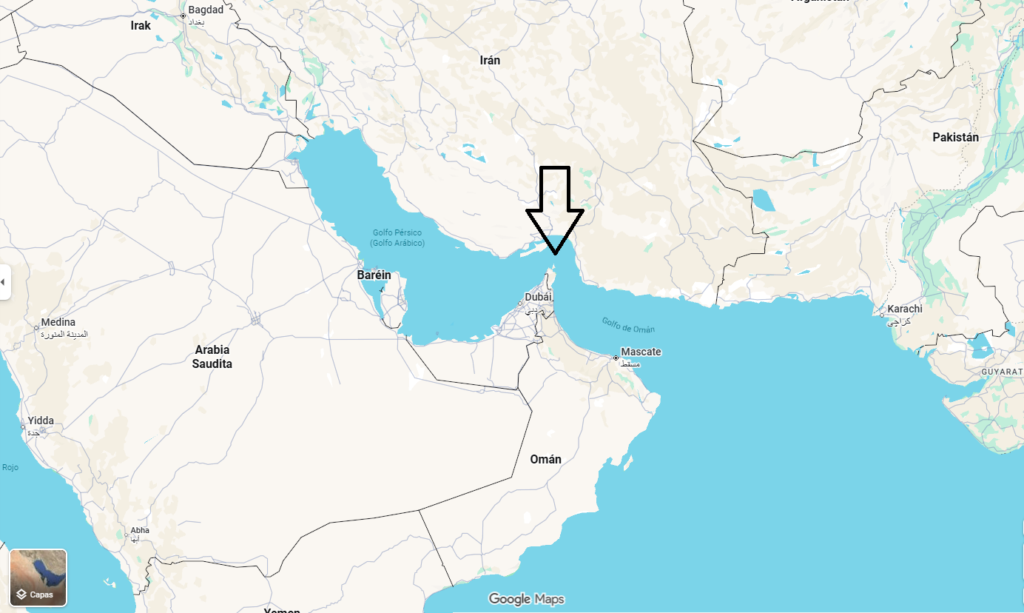 The Strait of Hormuz is a fundamental maritime passage for the global oil industry. Source: Google Maps. The tension materialized yesterday, March 26, when three container ships were forced to turn back after receiving direct warnings from Iran, while the White House and the Pentagon consider the deployment of 10,000 additional troops to the region. Bitcoin’s loss of strength has forced analysts to rethink their projections. Michaël van de Poppe, who until a few days ago maintained a bullish thesis based on the fact that the correction was in historical ranges of market floors, has today exposed its change of position. Van de Poppe has pointed out that The current macroeconomic context disfavors bitcoinexplaining that «as long as oil continues to show strength, the dollar will appreciate and interest rates will rise.» Under this premise, the specialist concluded that «there is no reason for bitcoin to have a superior performance, since it continues to behave like a risk asset.» The combination of geopolitical factors, rising energy costs, and the strength of the US dollar have set up a hostile environment for bitcoin and cryptocurrencies, dashing hopes of an immediate bullish continuation.