Mining difficulty experienced a drop of 11.16% on February 7, falling from 141.67 T (trillions or, in Spanish, billions) to 125.86 T. After the last adjustment of the network, reported by BitcoinDynamic, the metrics that estimate the potential income of Bitcoin miners showed a considerable improvement. One of those measurements was the hashprice, which estimates how much gross revenue it generates each unit of computing power dedicated to the Bitcoin networkexpressed in dollars per processing unit per day. That February 7, coinciding with the decrease in mining difficulty, the hashprice rose from $30 to reach, that same day, almost $36 per petahash per day (USD/PH/day), according to Hashrate Index data confirmed by the Braiins pool. This increase represents a improvement in profitability of approximately 20%.
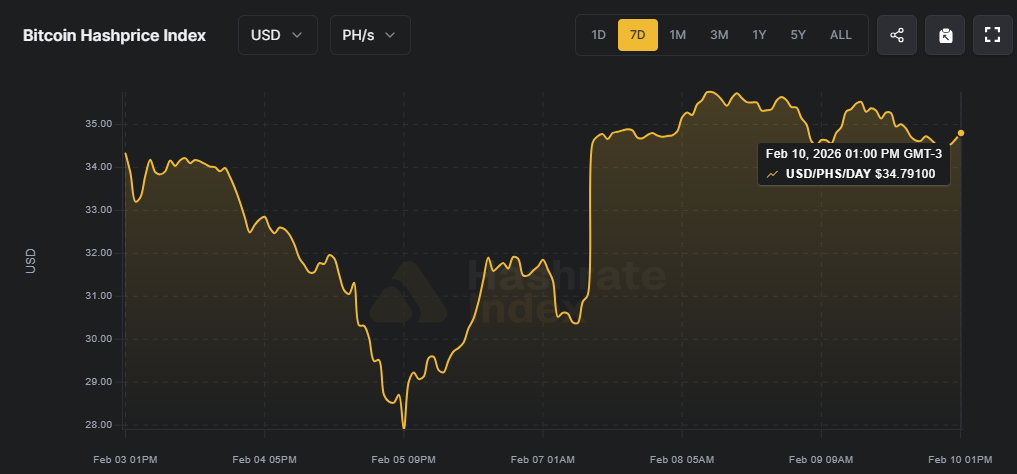 Evolution of the hashprice metric from February 3 to the present. Source: Hashrate Index. At the time of this note, the hashprice remains around 34.7 USD/PH/day. The growth of the hashprice becomes more relevant if it is compared to what was recorded on February 6, when that measurement marked its historical minimum of 27.9 USD/PH/dayworsening the mining crisis. Since the fall, the accumulated recovery reaches close to 29%.
Also increase the hashvalue for miners
In parallel, the hashvalue It also reflects a technical improvement. Unlike hashprice, this metric measures revenue directly in bitcoin (BTC), allowing miner profitability to be assessed without the interference of dollar price volatility, which tends to devalue in the long term. That same February 7, the hashvalue went from approximately 44 to 50 satoshis per petahash per day (SAT/PH/day), according to data from Braiins. This increase of 13.63% confirms that, regardless of the market price, active miners are receiving more satoshis for the same computing unit.
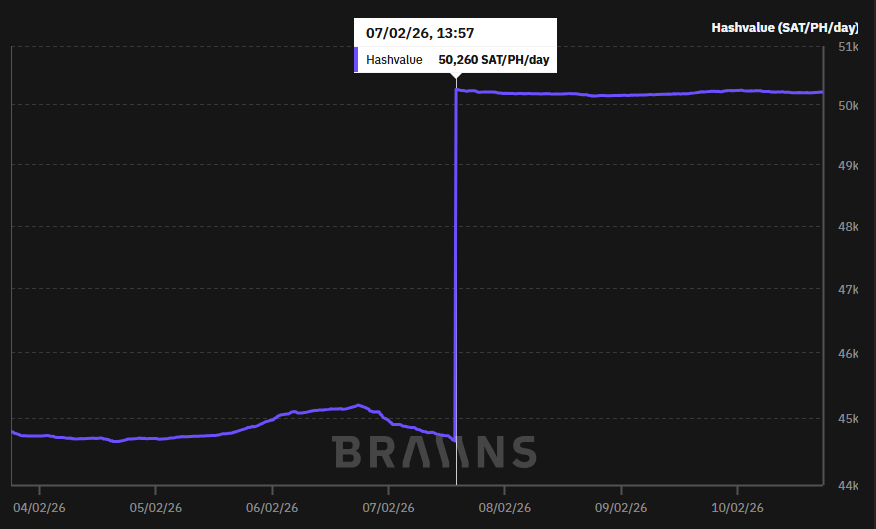 Chart that reflects the growth of the hashvalue from February 4 to the present. Source: Brains.
Bitcoin ASIC revenue increases
Another proof of the relief that miners received after the difficulty fell comes from the estimated income of ASICs to mine BTC. While BitcoinDynamic reported on February 6 that only 4 of those teams generated positive daily incomecurrent data from the Antpool pool reflects that that number grew to seven.
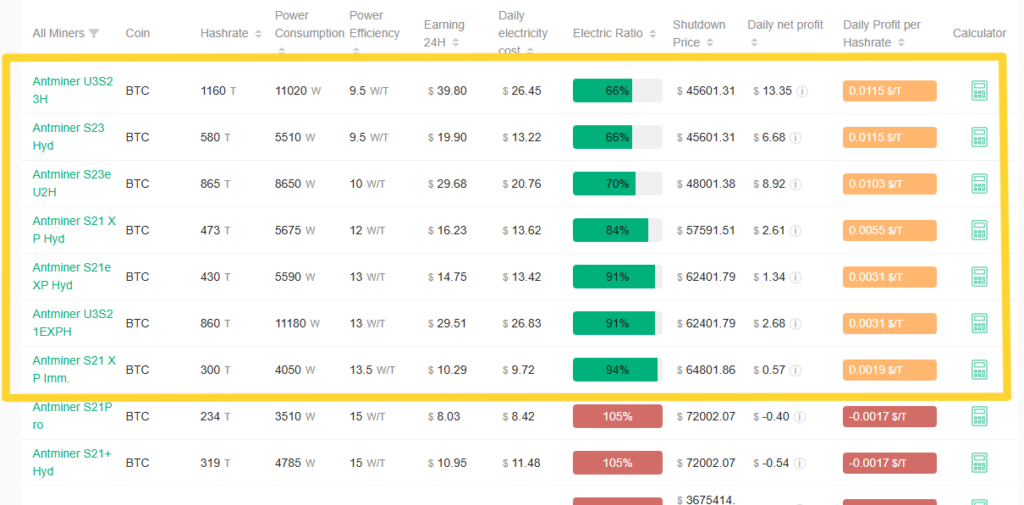 List of ASICs to mine BTC with their technical and profitability data. Source: Antpool. For example, the ASIC Antminer U3S23H, the most profitable currently, produces about USD 13.35 net daily, more than 85% increaseconsidering that on February 6 their earnings were USD 7.21 per day.
The triad of hashrate, difficulty and hashprice
The rallies highlighted here occurred in a context where the global hashrate is recovering after the 40% drop on January 22, caused by the cold wave in the southern United States. Added to this was the relief in the bitcoin price; After having hit an annual floor above USD 60,000, the rebound towards the USD 70,000 area in price allowed the fall in difficulty to translate into a much more aggressive jump in the hashprice in dollars.
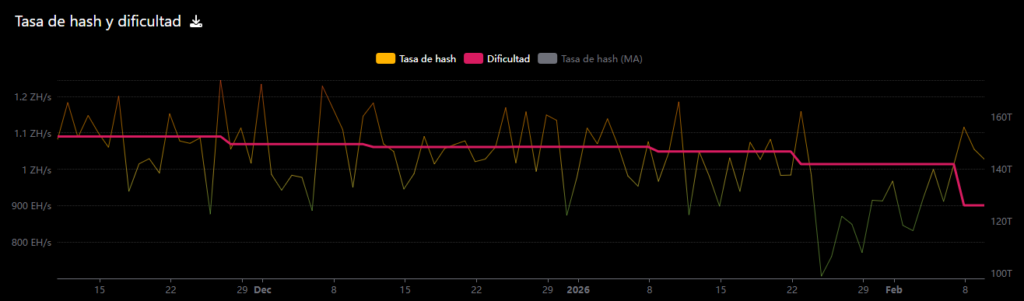 Hashrate (orange line) and Bitcoin difficulty (pink line). Source: mempool.space. With this upward trend in the hashrate, the next difficulty adjustment would be upwards (estimated to be greater than 12%), diluting revenue margins again. This dynamic shows the protocol’s reaction to a lack of power: when the hashrate drops sharply, block production slows down. However, profitability does not really improve until the network adjusts its difficulty downward, as happened on February 7. After the difficulty fell, an automatic increase in hashprice and hashvalue was generatedproviding operational respite without depending on a rise in the price of BTC. Since the hashrate sank to 700 EH/s on January 24, the network’s power has progressively returned to exceed the 1,000 EH/s area (1 zettahash per second). This trend reflects how miners are reconnecting your equipment to the network or deploying new computing unitsreversing the massive disconnection that had caused the outage of processing power weeks ago. As more miners compete again for the same fixed reward, the profitability per computing unit tends to compress. In short, the current rebound may not imply a structural improvement, but rather a temporary relief.
If the BTC price remains at current levels, around $68,000, and if the upcoming difficulty adjustment effectively dilutes the hashprice and hashvalue improvements, only a sustained increase in the price of BTC could offset increased technical competition, allowing this window of profitability to extend beyond the upcoming protocol rebalancing.