The weakness that the price of bitcoin (BTC) and other assets is showing exacerbates the proliferation of “false narratives,” as explained by Raoul Pal. Under that premise, the founder of the market intelligence firm Real Vision urges people to be careful and avoid falling into those generalized ideas that he considers erroneous in the markets. «The big narrative is that bitcoin and cryptocurrencies are broken. The cycle is over. Everything is screwed and we can’t have nice things,» he wrote. According to the investor, this type of reading gains traction when the price drops persistently. “It’s a seductive trickster narrative, no doubt, especially when we see the price vomiting every day,” he added. In an analysis on the matter, he pointed out that this narrative also leads to looking for specific culprits. “It has been dissociated from other assets… it is the fault of CZ… BlackRock… whatever,” he exemplified. Although, in reality, he maintained that the problem is broader and responds to macroeconomic factors. The founder of Real Vision explained that he reached this conclusion after comparing the behavior of bitcoin with that of SaaS stocks, that is, software as a service companies, a technological sector sensitive to financial conditions.
Bitcoin, SaaS stocks and the same macro factor
In terms of direction, SaaS and BTC show “the same graph,” he said. For the investor, this coincidence indicates that there is a common factor that is affecting both markets. That factor, as he explained, is US liquidity that has decreased and “we have all been overlooked.” «American liquidity has been limited,» he noted due to the operation of the Federal Reserve (FED), the central bank. He detailed that the FED’s reverse repo program was practically completed in 2024. This mechanism allows the organization to absorb liquidity from the financial system by receiving cash from banks and funds in exchange for very short-term bonds. Therefore, he indicates that the reconstruction in July and August of the TGA (Treasury General Account), the general account of the federal government where funds are deposited tax revenues and from which public payments are made, “had no monetary compensation.” “The result was a drain on liquidity,” Pal noted.
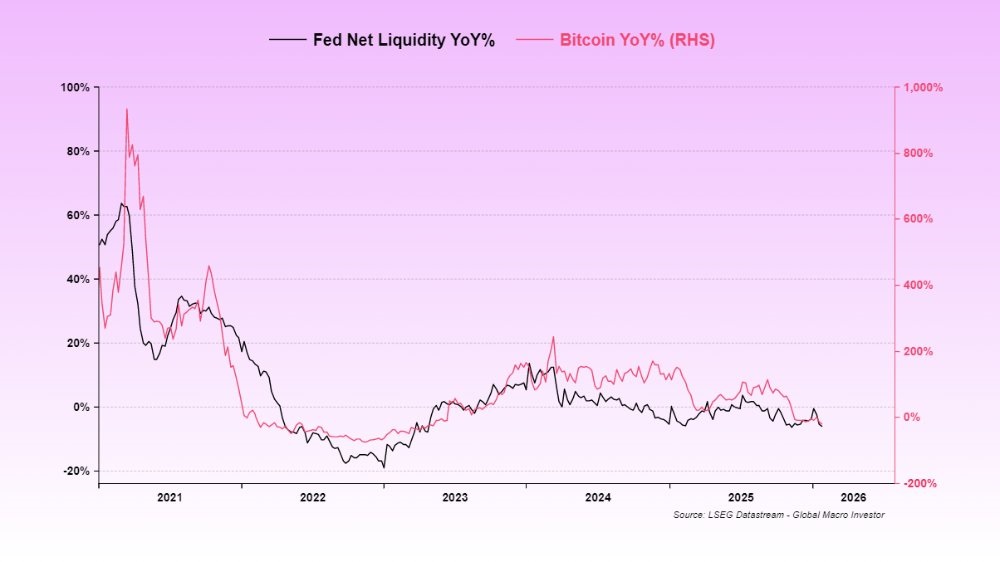 The Fed Net Liquidity metric calculates the Federal Reserve’s balance sheet by discounting the Reverse Repo program and the TGA balance. Source: Raoul Pal. This environment, he added, helps to understand why indicators have shown weakness. Among them, it includes the ISM, an index that measures the activity of the manufacturing and services sector in the United States and is usually affected when the liquidity of the financial system becomes more restrictive. In his opinion, The closures of the US government, due to rejection of the Trump administration’s measures, aggravated this scenario. He indicated that the Treasury covered this without reducing the TGA and, on the contrary, increased it, which implied a new loss of liquidity. “This is the air stagnation we are currently facing and it is causing brutal price action,” he said. However, he anticipated, as a plus, that the current closure is expected to end this week.
Liquidity waiting for a rebound
In that context, Pal explained that he normally uses global total liquidity as a reference, since it historically maintains a high correlation with bitcoin and the Nasdaq in the long term. However, in this phase of the cycle, he considers that the total liquidity of the United States is being more decisive. According to the founder of Real Vision, both bitcoin and long-term investment technology stocks, such as SaaS companies, were punished because “liquidity was temporarily withdrawn.” In addition, he explained that the rise in gold absorbed much of the marginal liquidity available in the financial system. “There was not enough liquidity to support all these assets, so the riskiest ones were affected,” he summarized. Nevertheless, He was optimistic about the coming months. For the specialist, liquidity will return with the flexibility of the eSLR, a regulatory standard that limits the leverage of large banks and which, if relaxed, would allow greater credit creation. Added to this was a possible partial drain on the TGA, fiscal stimulus and eventual interest rate cuts. “Often in these full-cycle operations, timing is what matters more than price,” Pal said. «Prices may go down, but as time goes by and the cycle develops, everything works itself out. That’s why I preach ‘patience!’. Things have to develop and seeing your accounts and losses only affects your mental health, not your wallet.»
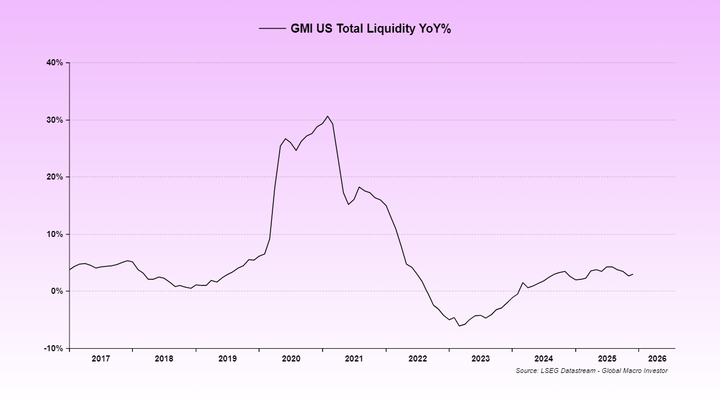 The GMI US Total Liquidity indicator measures how much liquidity is available in the United States financial system. Source: Raoul Pal.
BTC bulls not collapsing in the long term
From their perspective, the narrative that bitcoin is “broken” responds more to an incomplete reading of the macro context than to a structural change of the asset. «There is no disconnection. There was simply a confluence of events that drained liquidity unexpectedly,» he acknowledged. In relation to this, he mentioned that “another false narrative that is circulating” says that the new president of the FED, Kevin Warsh, will not cut interest rates, as he defended in the past. This idea «is real nonsense,» he commented, since otherwise «it will make the loan markets explode.» Under this vision, «we are still big bulls for 2026,» he said, referring to expected US policies. And he considered that, for full-cycle investors with risk tolerance, ups and downs like the current ones don’t matter. From another more cautious position, analysts warn of the possibility that the bitcoin market has entered a crypto winter that could deepen. According to its historical pattern, this was to be expected this year, as reported by BitcoinDynamic, with the possibility of a new bullish cycle starting later.