EL PAÍS offers the América Futura section openly for its daily and global information contribution on sustainable development. If you want to support our journalism, subscribe here.Latin America and the Caribbean are home to the greatest natural treasure on the globe. Here lives 60% of terrestrial life and the most biodiverse ecosystems, which vary from wetlands to coasts, deserts, tropical forests, glaciers or high-altitude Andean habitats. Although the majority of its area is rural, eight out of ten Latin Americans live in cities and, in a few decades, cities have become the goal (or the only option) for many. Their growth is undeniable. But how to respond to the needs of the population without harming the planet? Biodivercities—a concept that promotes biodiversity conservation as a central part of planning, land use planning, and the socioeconomic development of cities—are showing the demand and need to think about sustainable development as the only possible option if we want to combat climate change. “You cannot think about both elements. [ciudades y biodiversidad] separately. «The protection of nature offers ecosystem services that can be used as long as they are thought of in a comprehensive manner,» says Emil Rodríguez, coordinator of urban development at CAF-development bank of Latin America. His organization has promoted the Network of Biodivercities with the aim of integrating both worlds. The objective is to transform cities into spaces that coexist harmoniously with nature; think about clean transportation systems, resilient infrastructures or a greater number of urban parks or gardens in the heart of the metropolises. The network, which aims to create new positive links between the rural and the urban and prioritize circular economy scenarios, has already joined 63 municipalities in 11 countries in the region. From Ushuaia (Argentina) to Timbiquí (Colombia) or Niterói (Brazil), the challenges are the same, although with nuances and taking the riches of each territory as raw material: reducing the ravages of global warming. An example would be to continue exploring. productive sectors such as tourism in coastal areas, but without leaving the protection of beaches in the background with respectful and long-term regulations.A view of Ushuaia (Argentina), the southernmost city in the world. Threegen (Getty Images) “It is not that, by taking the path of conservation, progress will be detrimental,” adds Ángel Cárdenas, manager of urban development, water and creative economies at CAF. «It’s quite the opposite. We have to rethink how we approach the territory.» And the cities are the key. «The consequences of global warming in these areas are increasing; migratory pressure, floods… These have to be at the center of the climate debate.» And this is part of the global agenda, not only in this region. The world’s cities occupy 3% of the land, but account for between 60% and 80% of energy consumption and 75% of carbon emissions. For this reason, the eleventh sustainable development goal (SDG) of the United Nations is linked to making them more inclusive, safe, resilient and green.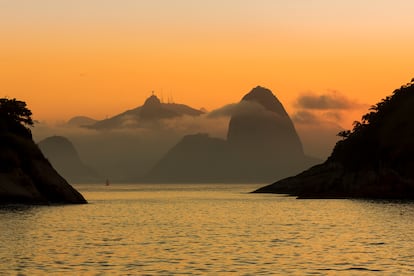 View from Piratininga beach in Niteroi, with Rio de Janeiro on the opposite side of Guanabara Bay. Marcos Felipe TD (Getty Images) Barranquilla is a good example of that revolution that the network of biodivercities seeks. The first major initiative of the Colombian coastal city was the restoration of the Mallorquín swamp in the estuary of the Magdalena River. This lagoon is separated from the Caribbean Sea by a narrow beach, and from the mouth of the river by a dam built to allow cargo ships to enter the port. For decades, pollution decimated the swamp’s ability to capture carbon emissions and provide food to local communities. Even with several setbacks, it preserves four species of mangrove – including the endangered red one –, 81 species of birds, 15 of marine invertebrates, nine of fish, nine of amphibians and seven of reptiles. The new project includes sanitation works on the Magdalena River, and trails and infrastructure for sustainable tourist activities such as bird watching. “The interesting thing is that Barranquilla has incorporated this vision of the urban approach and is articulated with the national government,” explains Cárdenas. What is sought with this project is to replicate this model in which local ideas are promoted, scaled and accompanied during their process. Other examples of good practices are the recovery of the river in Lima, Peru, the preservation of lagoons in Niteroi, Brazil, the care of the arid areas of southern Ecuador, the initiatives of Las Palmas (El Salvador) to align with other municipalities to protect a large biosphere reserve, the attempts to recover public spaces in Ushuaia (Argentina). “Biodiversity, strategically located within an orderly and comprehensive planning, can be an element of social transformation,” adds Cárdenas.
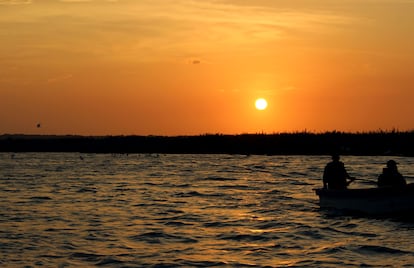 The Isla Salamenca Park, in Barranquilla (Colombia), considered the «largest bird airport in the world.» Hugo Penso (EFE)
Create the city to live in
For citizens to benefit from the green turn of their cities, experts encourage them to be part of the change through participatory budgets and community boards. “It is very important that there is awareness among citizens and an alliance between us and local institutions to prioritize certain projects,” explains Rodríguez. At a global level, Barcelona continues to be one of the urban benchmarks. And it has been for less than thirty years. The spaces dedicated to pedestrians, the increase in green areas and planning focused on neighbors were achieved thanks to citizen participation.