They are not homicidal, but one of the qualities that are usually demanded is a certain murderous instinct. The CEOS Serial (serial executive directors, a word game with, indeed, the murderers) have been the dominant species of the corporate world in the first decades of the 21st century, those in charge, to a large extent, to lead the not always placid third industrial revolution. Velocirrapores from business, jump from one company to another as who chains peaks in the Himalayas. In general, they land for a short period with a reconversion or adjustment plan in the cartridges, an executive project that demands initiative, almost messianic leadership and surgical coldness. Once the task is done, the same is going to be done to another site. More information a few years ago, The Wall Street Journal cited several examples of this nomadic nomadic management at the highest level, people as tanned and of a fang as sharp as the Canadian Richard C. Notebaert, which in just six years had chained the direction of four large mobile phone companies. The novelty lately is that, at least in the opinion of various specialized media, the series CEO is now a specimen that runs serious risk of extinction. Above all, in its natural scenario, United States. Anjili Raval, an expert journalist in large companies, states in Financial Times that he has «become fashionable.» The model that predominates right now, in Raval's words, is «One and Done» (once and enough), because it is increasingly difficult to find professionals willing to submit again and again to the high levels of pressure, demand and media exposure that implies being the CEO of a large company. Richard C. Notebaert, who in just six years chained the direction of four large mobile phone companies. Brian Niccol, in Starbucks after going through Chipotle or Taco Bell, and Dara Kosrowshahi, in Uber after going through Expedia. But they begin to be exceptions.
The decline of nomadic management?
According to a report by Russell Reynolds Associates, in 2024 there were 220 relays in the executive direction of large companies of the 13 main international markets. On 187 occasions (85% of the total), the position was obtained by professionals who became CEOS for the first time, a percentage that has not increased since 2018.
Recent studies show that the main US companies paid their CEOs an average of $ 17.1 million annually in 2024, almost a fifth more than in 2023. In contrast, expectations and level of demand have also increased.
In 2023, by the way, there was a historical relay record at the summit and the average period of permanence in office was reduced by just over three years. It is also significant that around a third of those who left a position as an executive director in the last year they stated that they do not consider going through a similar experience. In the words of Laura Sanderson, regional co -director of Russell Reynolds, «the decline of the CEO in series has to do, most likely, with the current nature of the position, which has become more demanding and less satisfactory than ever. The possibilities of retiring with intact health and reputation are increasingly scarce, and most leaders who have gone through that experience do not repeat it.»  Luca de Meo, currently CEO of Kering, who used to be from Renault and Seat. The modern CEO no longer conceives its professional career as a frantic succession of obstacle racing in which you will be forced to start over, in another company from another sector, every three or four years. Now it is more about making a vital aspiration come true, that of going up steps on the corporate ladder until it reaches the top to, once there, enjoy or suffer it while lasting knowing that it will be a unique, happily unrepeatable experience. The management assassers continue to crown their particular Everest, but they no longer seduce the perspective of continuing to play, then the skin in the K2 or in Annapurna. In the words of a high British executive interviewed by Financial Times, «it can be very rewarding, but it sucks you to the last drop of blood: I am very clear that when I finish what I am doing right now I will never be CEO again.»
Before a star CEO could make the leap of an automotive company to a fashion design or technological innovation, but the impact of the deep transformations that these sectors are going through makes learning curves more and more pronounced and the specific knowledge is more valuable.
And that is a better paid job than ever. Recent studies show that the main US companies paid their CEOs an average of 17.1 million dollars annually in 2024, almost a fifth more than in 2023. In contrast, expectations and demand have also increased, which now includes, for example, an unpublished level of media exposure. Since the executives charge authentic fortunes, they are expected of them to exercise the bow masks of the business activity and, if third, of rock'n roll stars, a new demand that tends to exclude from the equation the effective but rather gray managers. Sanderson considers that this increasingly media profile of business management helps to erode the image and quality of life of those who exercise it.
Chronicle of an announced death
Anjili Raval considers that a decisive turning point in this regard was the murder, in December 2024, by Brian Thompson, CEO of UnitedHealthcare, a crime perpetrated by a lone wolf, Luigi Mangione, guided by the anti -spring resentment, but that he knew perfectly who was shooting. Thompson had just turned 50 and had more than 20 on payroll of the company he ended up directing. It was not a series CEO, but rather an insider that had perched the cusp thanks to internal promotion mechanisms, but had become the visible face of the controversial policy of his company, the most profitable in the sector but also the most indicated by the media due to the multiple demands for lack of coverage in the insurance policies that accumulated in recent years. According to his widow, the high executive had been receiving threats for months. 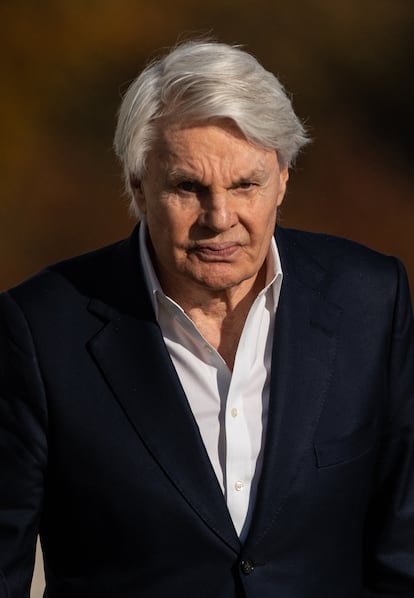 Mike Jeffries, former CEO of Abercrombie and Fitch, example of the superstar chief turned into a problematic figure. In the opinion of Patricia Lenkov, of the Corporate Cazatalantos Company Agility Executive Search, more and more high -level managers are more than rejecting the opportunity to become CEOS because they do not feel able to tolerate stress levels, loss of privacy and deterioration of the quality of life that is frequently implies. Given the circumstances, according to Lenkov, it is increasingly frequent that companies «resort to internal promotion.» In principle, it looks like an optimal business. Instead of hiring the services of a luxury mercenary, a management star with a paratrooper soul that will require a armored contract, why not bet on the managing talent formed in the company itself? Until a few years ago, it was considered that the obvious inconvenience of this strategy was the probable emotional implication of the Insider, who had been in the company for some time and had developed their own loyalty networks. That would make them less likely to perform surgical actions, such as mass dismissals. In addition, it was assumed that the CEOs in series contributed, in addition to contrasted experience and media profile, lateral thinking and a fresh look, which made them suitable revulsions, because they were not linked to the inertia of an anquity business culture. Now, given the growing shortage of wandering talent, many Head-Hunters and Human Resources departments begin to turn around reasoning. Management expert Christine Barton states that one of the inconveniences of the CEO in series is «the growing complexity» of modern business environments. Until a few years ago, a star CEO could make the leap of an automotive company to a fashion or technological innovation design, but the impact of the deep transformations that these sectors are going through now causes the learning curves to be increasingly pronounced and the specific knowledge is more valuable.
 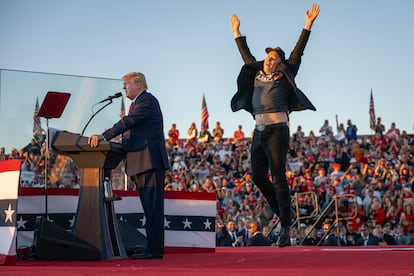 Elon Musk, in the image by jumping with Donald Trump during his second presidential campaign, is the example of what can happen with an out of control. Jim Watson (AFP via Getty Images) also occurs within the companies themselves. If an CEO is going to exercise its position for a period of just three years, what is the meaning of the first of them to really know its employees and try to precisely understand the environment that aims to transform or consolidate? It is a modern dilemma that, as Lenkov concludes, each company resolves based on its own specific criteria and needs.
I was there
But the song of the swan of the wandering manager today in retired may have to look for it in Serial CEO: Lessons from the Climb, cross between manual and autobiographical test written by the former itinerant manager and today University Professor T. Paul Thomas. Thomas was executive director of up to 12 companies in his more than 30 years at the top of the trophic chain. In his long journey, he made unpopular decisions, alternated successes and failures (with predominance of the first, since otherwise his career had been very short) and several times he felt the temptation to transfer the amount of his last compensation to a Caribbean paradise and dedicate his last decades to play golf. But he reincidated again and again, tolerated overwhelming stress levels, granted hundreds of interviews and today recommends his students to ask, first, «why they want to be managers.» The correct answer, in his opinion, is that «if you do not worry about the people you are going to be in charge, if you do not empathize with them, you will have a very bad time.» Better dedicate yourself to anything else. Being a good CEO, thinks Thomas in 2025, when he has no ammunition with a large caliber in the cartridges, it is to be able to «attribute all the merit to your team when things are going well and assume responsibility when they are going wrong.» For that they pay you. Because they assume that you have CEO wood, which is equivalent to saying that you are made of another pasta.